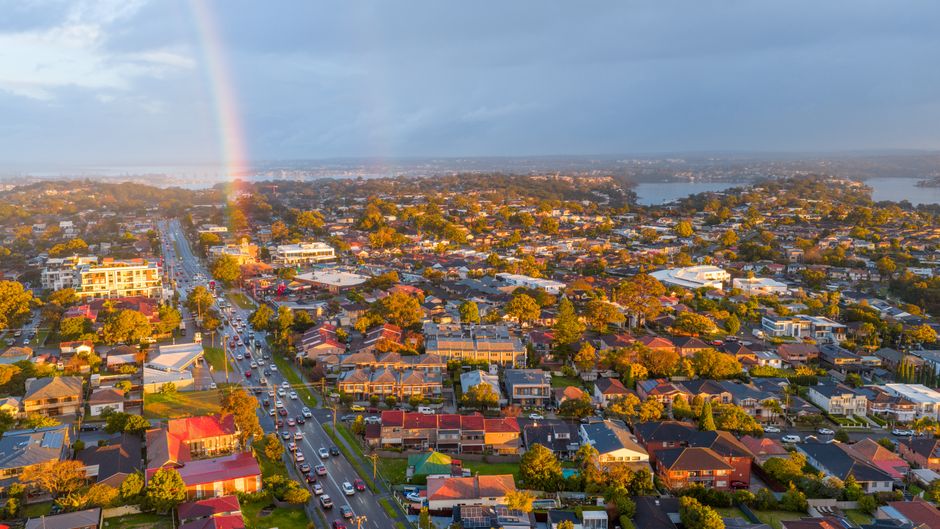
While Sydney and Melbourne grab national headlines for runaway property prices, Toowoomba's established suburbs are quietly proving that blue-chip credentials don't have to come with a blue-chip price tag.
Take Highfields. Long regarded as one of the region's most sought-after addresses, the suburb sits just 12 kilometres north-west of the CBD and offers the kind of tree-lined streets, quality schools and amenities that typically command premium valuations in coastal markets. Yet median prices hover around $530,000—barely above the Queensland benchmark of $490,000. For investors comparing this to equivalent suburbs in Brisbane or beyond, the margin is striking.
"Highfields has always attracted families and professionals," says local agent commentary. "But what's changed is the narrative around Toowoomba itself. The inland rail project, the regional job growth, and the fact that you can still find a quality four-bedroom home on a decent block without paying $700,000—that's compelling."
The $10 billion inland rail infrastructure project is reshaping perceptions of the region's economic future. Toowoomba's position as a logistics and agricultural hub is being reinforced by major freight connectivity, which is already trickling into property sentiment. First-home buyers and investors who might have been priced out of coastal growth corridors are increasingly looking inland.
Glenvale, adjacent to Highfields, tells a similar story. New estates are opening alongside established neighbourhoods, creating a mix of entry-level and premium stock. Amenities including Glenvale Shopping Centre, proximity to Toowoomba Grammar, and the planned expansion of local recreational facilities are adding layers of appeal.
What distinguishes these suburbs from speculative growth areas is stability. Highfields residents enjoy established shopping precincts on Bridge Street, easy access to Queen Mary Falls and the surrounding ranges, and a genuine sense of community infrastructure. The schools—both public and private—are well-regarded and have long waiting lists. These aren't new-release suburbs banking on future potential; they're proven neighbourhoods with existing, functioning ecosystems.
For investors, the equation is straightforward: capital growth potential tied to regional infrastructure investment, rental yields supported by consistent tenant demand, and entry prices that don't require the leverage exposure currently needed in capital cities. First-home buyers, meanwhile, get a foothold in an established community without the competition frenzy that dominates Melbourne's autumn market.
As national headlines fixate on celebrity divorces and coastal auctions, Toowoomba's blue-chip suburbs remain a quiet anomaly—the places where quality and value haven't yet parted ways.
This article was compiled by AI from the sources linked above and screened before publishing. See our editorial standards.