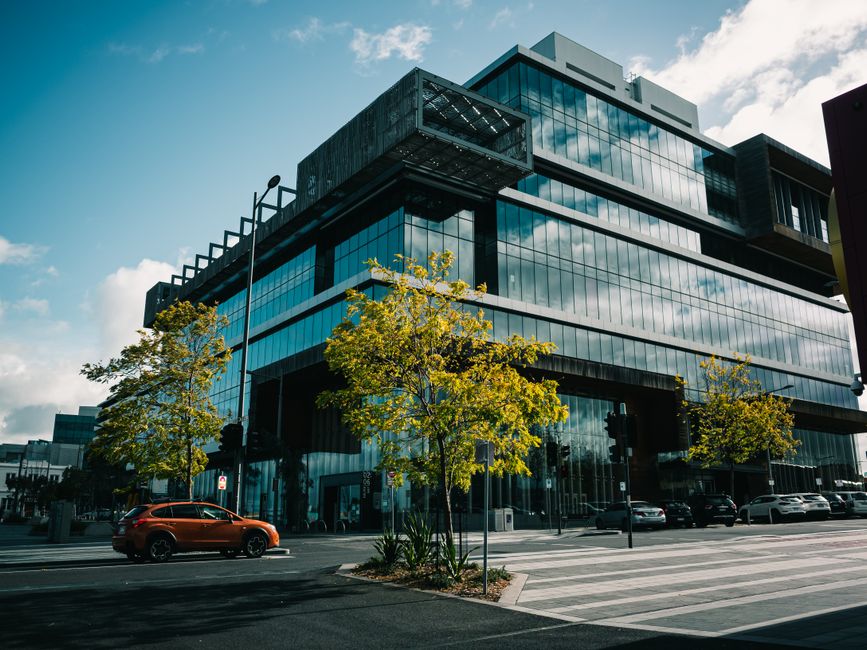
As corporations reassess their footprint post-pandemic, savvy investors and developers in the Garden City are capitalising on a historic shift in where Australian business wants to plant roots.
Our reporters are based in Toowoomba and cover local government, business and community. We are independently owned and editorially independent. Stories are produced and reviewed by the Toowoomba editorial desk. Read about our newsroom →Read our editorial standards →
Listen to this article · 3:54
Toowoomba's commercial property market is experiencing a genuine inflection point. After years of Sydney and Melbourne dominance, regional Queensland centres are finally capturing sustained corporate attention—and the opportunities emerging here are substantial enough to reshape the city's business geography.
The numbers tell a compelling story. Office vacancy rates across Toowoomba's CBD have tightened to under 8 per cent, well below the national average of 12.5 per cent. Rental yields on quality commercial properties along Margaret Street and in the Civic precinct are now tracking at 5.5 to 6.2 per cent—substantially higher than comparable assets in Brisbane's outer suburbs. Commercial property values have appreciated 18 per cent over the past two years, according to local valuers, yet remain 40 per cent cheaper per square metre than Brisbane's CBD.
Several factors are converging. First, hybrid work arrangements have made geographic arbitrage genuinely viable; companies can operate regional support hubs servicing national operations without expensive capital city overheads. Second, Toowoomba's position as a logistics and agricultural processing hub—already home to major distribution operations and food manufacturing—creates natural clustering around professional and business services. Third, the Darling Downs' population growth trajectory, now averaging 2.1 per cent annually, is outpacing many larger metros.
The winners emerging are threefold. Local developers who secured strategic sites five years ago are now refinancing or selling into sustained demand. A number of small development groups have moved quickly to convert underutilised warehouse space in South Toowoomba into flexible office modules, capturing demand from small-to-medium enterprises seeking professional environments at rates 35 per cent cheaper than Brisbane equivalents.
Large corporates are the second wave beneficiaries. Professional services firms, tech companies, and financial services providers have begun establishing satellite operations along the Ruthven Street corridor and around the USQ precinct. These aren't token presences; they're substantive operations, often managing regional client bases across Queensland and northern New South Wales.
Most interestingly, local investors—particularly family offices and established business owners—are increasingly converting capital from struggling retail or hospitality investments into commercial property, where fundamentals appear far more durable.
The window, however, won't remain indefinitely open. As awareness spreads and vacancy tightens further, the price arbitrage disappears. Investors and operators moving now are capturing genuine value; those waiting for validation from larger institutional players may find the opportunity has already priced itself in.
Toowoomba's commercial property market remains fundamentally sound, but it's no longer a sleeping opportunity—it's actively awakening.
This article was compiled by AI from the sources linked above and screened before publishing. See our editorial standards.