property
Toowoomba Apartment Tower Proposal Tests Whether the Garden City Is Ready to Build Up
A multi-storey residential tower flagged for the CBD fringe is forcing a hard conversation about density, affordability and who Toowoomba is building for.
How we reported this
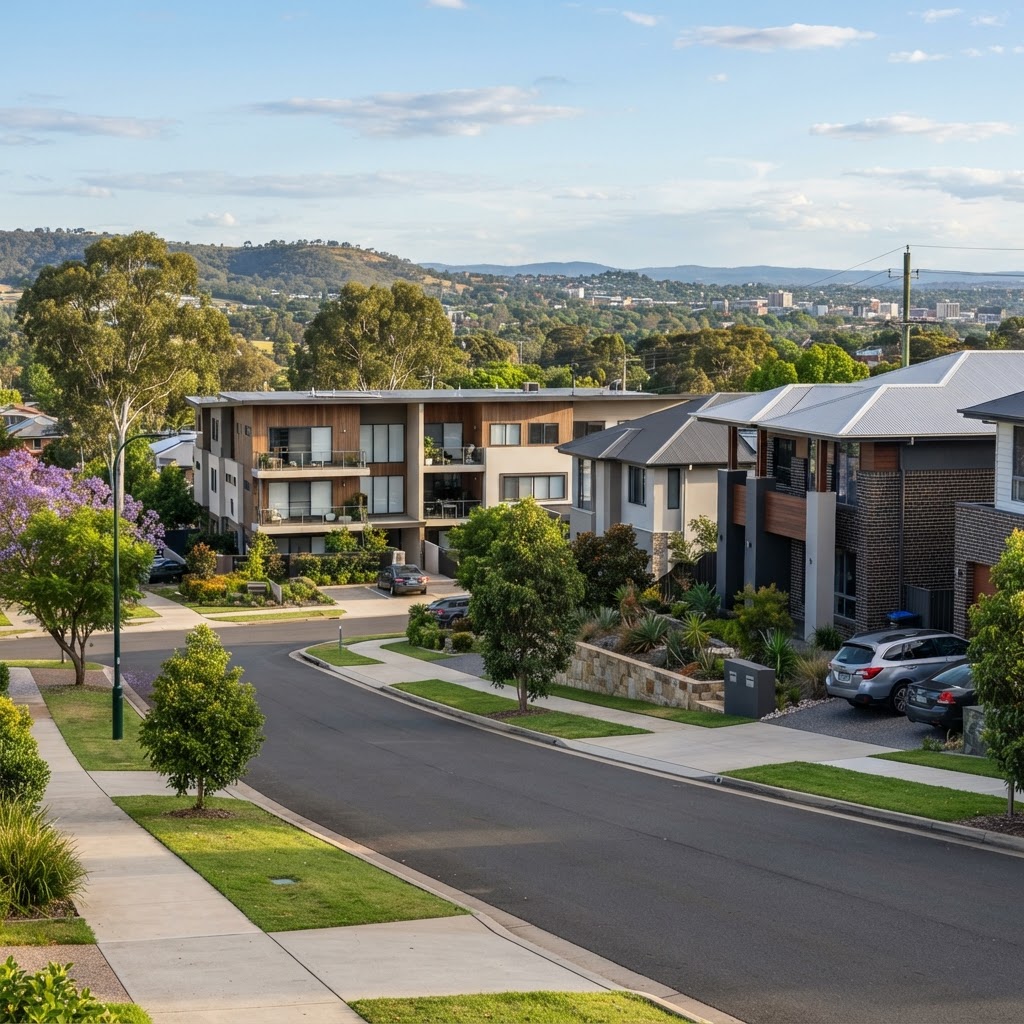
A development application for a multi-storey apartment tower on the eastern edge of Toowoomba's CBD has landed with the Toowoomba Regional Council, and the timing could hardly be more pointed. With southeast Queensland's median house price sitting around $490,000 and the $10 billion Inland Rail project steadily reshaping the region's economic gravity, the proposal is the most significant density play the city has seen in years.
The application, lodged in recent weeks, targets a site within walking distance of Ruthven Street's commercial spine, the kind of location that planners and developers have long argued is exactly where vertical living should go. Whether the council, and the market, agree is another matter entirely.
Why This Moment Is Different
Toowoomba has spent the better part of a decade growing outward. Highfields to the north and Glenvale to the southwest have absorbed the bulk of new residential supply, with land releases and house-and-land packages doing the heavy lifting for a buyer pool that has, until recently, resisted the apartment model almost on principle.
But the economics are shifting. Queensland's median dwelling price has risen sharply over the past three years, and the gap between a detached house in a growth corridor and an entry-level apartment in an established suburb is narrowing fast enough that even traditionally skeptical buyers are reconsidering. Nationally, younger cohorts, particularly those in their mid-to-late twenties, consistently tell surveys they still want to own property, even if the form that ownership takes has to change.
Toowoomba's rental vacancy rate has been running below two percent for an extended period, putting pressure on everyone from agricultural workers on short-term contracts to university students at the University of Southern Queensland's Darling Heights campus. A tower delivering 40, 60 or more apartments into the CBD fringe doesn't solve that problem outright, but it contributes to a stock base that has been running on empty.
The Inland Rail factor is not theoretical. The project's Queensland section brings construction workers, logistics firms and eventually permanent freight and operational staff into the region. That workforce needs somewhere to live. Toowoomba's industrial precincts around Charlton and the Toowoomba Wellcamp Airport corridor are already attracting associated commercial investment, and residential supply in the city proper has not kept pace.
What the Numbers Suggest
Apartment sales in Toowoomba have historically been a thin slice of total transactions, dominated by smaller unit blocks in the inner suburbs rather than purpose-built high-density towers. That means a genuine multi-storey development would be entering a market with limited comparable sales data, a challenge for valuers, lenders and buyers alike.
Industry observers point to the prestige end of the market as a useful reference. A family home in Highton, a comparable regional city context interstate, recently listed at around $2 million illustrates that regional markets can sustain premium price points when the product is right. Toowoomba's equivalent prestige market, concentrated around streets like Mackenzie Street and the heritage pocket near Queens Park, has supported seven-figure sales. Whether that appetite extends to a high-rise apartment at, say, $550,000 to $750,000 per unit remains the central question developers are trying to answer.
Toowoomba Regional Council's planning scheme does identify the CBD and inner-city frame as appropriate for increased density. The corridor along Neil Street and Margaret Street, in particular, has been flagged in strategic documents as suited to mixed-use and higher-density residential outcomes.
For buyers and investors watching the application's progress, the practical advice is straightforward: track the council's development register, attend any public notification period, and get pre-approval sorted early. If the tower proceeds and sells off the plan, early-bird pricing in the first release stage has historically offered the strongest value, and in a market this undersupplied, stock at any price point above a two-bedroom unit tends to move faster than pessimists expect.
A decision from Toowoomba Regional Council is not expected before late 2026 at the earliest, giving the market several months to digest what vertical living on Ruthven Street's doorstep might actually look like.
This article is general information only and is not personal financial or investment advice. Consider your own circumstances and seek licensed professional advice before making financial decisions.